
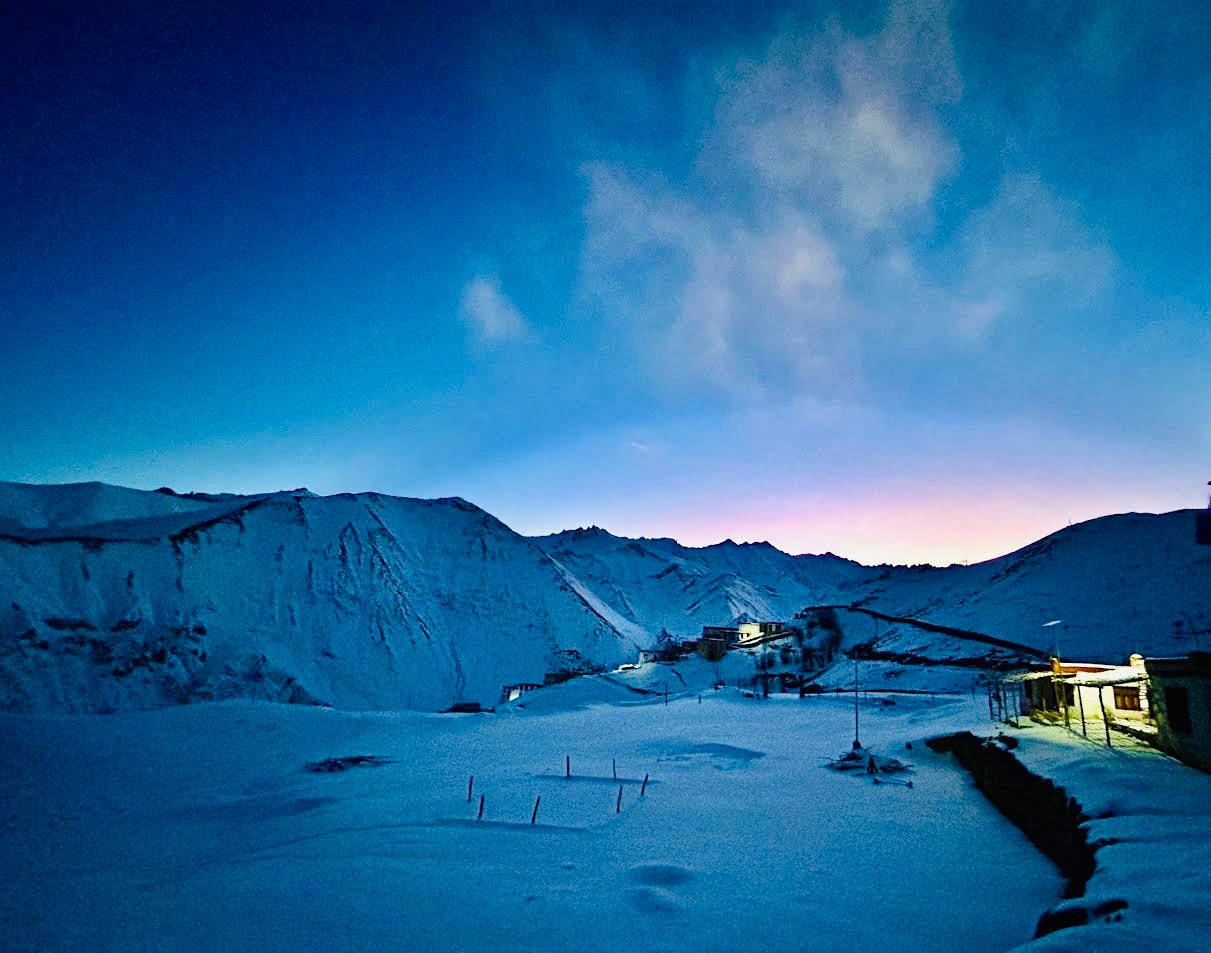
There is something solemnly beautiful about a sunset—like bidding farewell to a beloved celestial companion, parting with the unspoken promise of return. In that brief golden hour, the sky is cast in a mystical glow, a shifting palette of crimson, amber, and at times, an ethereal mauve that seems borrowed from celestial abode.
It is in this fleeting moment—when the sun abides at the horizon—that illusion dissolves, and a quiet truth is revealed: everything is transient. The coming and going, though seemingly opposite, are but one motion. Necessary. Inevitable. Sacred in their impermanence.
To watch the sun set is to be reminded that beauty does not resist change, it arises from it.
Thereafter, a quiet rhythm takes hold, hours of dark and light repeating in steady rotation. Isn’t there comfort in such constancy?
Nature moves in perfect rhythm-changing, releasing, never grasping. It lives in harmony with impermanence, accepting each shift with quiet grace.
But what of us humans? When did we forget how to flow, to let go, to trust the beauty of passing moments?
In Vajrayana Buddhism, the sun disc is a powerful symbol of ultimate wisdom, particularly the realization of emptiness (śūnyatā)—the true nature of reality. Yet emptiness is not a void; it is luminous awareness itself, vast and unbounded, from which all things arise and to which all things return.
When a deity is visualized abiding upon a radiant sun disc, it is not distant divinity being invoked, but the recognition of one’s own innate Buddha-nature—the clear, ever-present consciousness beyond time and space. The sun does not vanish when night falls; its light continues to shine beyond the veil of darkness. So too does wisdom remain, steady and unbroken, even as moments fade and forms dissolve.
To realize this is to awaken to the sacredness of impermanence, to see that each breath, each passing instant, is a complete expression of awakening itself. The fullness of being is not found in holding on, but in the luminous awareness that allows all things to come and go in their own time.